
Why Employees Stop Telling the Truth (And How to Fix It)
In this episode of The Leadership Hustle, Andrea Fredrickson and Michelle Hill explore the truth that every leader is the standard for their team. What you say matters, but what you do matters more. When leaders promote values like collaboration, accountability, or trust but fail to live them consistently, their actions send a louder message than their words.
Andrea and Michelle discuss how leaders can unintentionally undermine their own expectations through mixed signals, selective accountability, or inconsistent behavior. These gaps can lower trust, damage morale, and drive top performers to leave. The conversation highlights how to close the gap between intention and perception by seeking honest feedback, acting on advice, and aligning daily habits with the standards you expect from others.
Listeners will walk away with tools to improve self-awareness, strengthen trust, and model the behavior they want to see across their teams.

LISTEN TO THE EPISODE
Expand Your Leadership Skills.
Why Employees Stop Telling the Truth (And How to Fix It)
If you’ve ever wondered why employees stop telling the truth, the answer is rarely about dishonesty. It’s usually about safety. Over time, small leadership behaviors, subtle reactions, and meeting dynamics teach people whether speaking up is worth the risk. When the cost of honesty feels higher than the cost of silence, truth disappears quietly.
At Revela, we believe workplace trust is built when leaders make it safe, and worthwhile, for employees to speak up. On this episode of The Leadership Hustle, Andrea Fredrickson and Michelle Hill unpacked why employees stop telling the truth, how leadership communication shapes workplace trust, and what happens to organizational culture when silence becomes the norm.

Why Employees Stop Telling the Truth in the First Place
Leaders often assume their teams are transparent. If no one is raising concerns, challenging ideas, or disagreeing in meetings, it can feel like alignment. But alignment and silence are not the same thing.
Fredrickson frequently asks executives a simple question: Do your people challenge you? Not “Are they difficult?” Not “Do they complain?” But do they push back? Do they question assumptions? Do they tell you what you need to hear, even when it’s uncomfortable? Many leaders hesitate.
When employees stop speaking up at work, it doesn’t happen overnight. It develops as a pattern.
Hill highlighted one of the most common causes: when leaders present both the problem and the solution in the same breath. Once a leader says, “Here’s the issue and here’s how I think we should solve it,” it subtly closes the door to creativity. As she explained, once an idea is planted, “...it makes it really hard for anyone to think differently.” The brain stops searching for alternatives. Silence begins there.
Leadership Communication That Shuts Down Speaking Up at Work
Leadership communication plays a central role in whether people speak up or stay quiet. Fast processors (often decisive leaders) may move quickly through discussion. They think out loud. They talk rapidly. They propose ideas confidently. Meanwhile, others in the room may need time to reflect before responding. If the meeting moves forward before they’ve processed, they remain silent.
Fredrickson admitted she once caught herself doing exactly what she advises against: offering her solution first. Even when she clarified, “I’m not married to this,” the idea had already taken root. The cognitive effort required to counter it was higher than the effort required to agree. When leaders consistently speak first and speak firmly, teams learn to follow. That’s not collaboration. That’s compliance.

Psychological Safety and Workplace Trust
At the core of why employees stop telling the truth is psychological safety. This is the belief that speaking honestly will not result in punishment, embarrassment, or status loss.
Hill explained that when leaders respond to ideas with condescension, dismissiveness, or even subtle facial expressions, it sends a message. A simple “no” followed by elaboration can feel like rejection. An eye roll may mean “I’m thinking,” but it can be interpreted as disapproval.
Employees watch carefully. As Hill noted, “They observe how you respond to someone else. And now I’m not going to speak up because I didn’t like how you spoke to them.” Workplace trust erodes not through policy, but through pattern.
When leaders listen with the intent to move the conversation forward rather than understand it, people notice. If a leader has clearly “already made up their mind,” as Fredrickson described, then speaking up feels pointless.
False Harmony and the Illusion of Alignment
Silence can be deceptive. Leaders may interpret agreement as alignment. Meetings run smoothly. Decisions move quickly. There’s no friction. Fredrickson recalled thinking, “They all agreed with me. This must be a good idea.” She calls this false harmony.
Real organizational culture isn’t built on easy meetings. It’s built on honest dialogue. When leaders prioritize comfort over openness, they unintentionally discourage disagreement. And without productive disagreement, innovation stalls.
Hill described what healthy tension looks like: sometimes it’s intense, but it’s productive. It's a debate with boundaries. When leaders shut down those conversations prematurely, they create team communication issues that ripple outward. Silence becomes the safer option.
The Cost of Silence in Organizational Culture
When employees stop telling the truth, the cost is rarely immediate. It accumulates quietly. Fredrickson described it bluntly: “There is a high cost when truth is not discussed or information isn't brought forward that would be beneficial to a decision moving forward.” That cost shows up in multiple ways:
Innovation stagnates: Without diverse input, decisions reflect a single perspective. Organizations become tunnel-visioned and opportunities are missed.
Financial risk increases: Frontline employees often see operational risks first. If they don’t speak up, mistakes compound and clients may be lost before leaders understand why. Fredrickson pointed out that there should never be surprise losses of customers. If information isn’t moving upward, silence is costing you revenue.
Employee performance declines: When ideas aren’t welcomed, employees disengage. They shift from proactive to reactive. Instead of contributing insight, they wait for direction.
You lose your best people: As Fredrickson warned, “Our very best people, if they don’t get to shine, if they don’t have a voice, they’re going to leave.” High performers want impact. When speaking up at work feels pointless, they find environments where their input matters. Employee retention suffers.

Leadership Accountability as a Two-Way Responsibility
Why employees stop telling the truth is not solely a leadership failure. But leadership sets the tone. Fredrickson emphasized that responsibility goes both ways. Leaders must be willing to hear uncomfortable truths and employees must be willing to share them.
But leaders carry more weight. Their facial expressions, tone, posture, and pacing influence whether others feel safe. Hill noted that people interpret body language more strongly than words. A leader’s thoughtful expression may be misread as disapproval.
Humans fill in gaps with stories. “We humans are the only organism on this Earth that makes up stories,” Fredrickson explained. When context is missing, employees create their own narrative and often assume the worst. Leadership accountability means being intentional about how you respond, not just what you say.
How Speaking Up at Work Becomes a Cultural Habit
Silence is learned behavior. If employees come from previous workplaces where truth was punished, they bring that experience with them. It takes time and consistent reinforcement to rebuild workplace trust. Leaders must create platforms for input:
Pause after presenting an idea
Ask for opposing viewpoints
Invite quieter voices intentionally
Allow processing time before decisions
Hill referenced the concept “leaders speak last.” When leaders withhold their perspective initially, it opens cognitive space for others. And when employees do speak up, leaders must respond thoughtfully, even if they disagree. A quick “no” closes the door. A curious “tell me more” keeps it open.
Company Culture Reflects What Leaders Tolerate
Organizational culture is not defined by mission statements. It’s shaped by repeated behaviors. If leaders reward harmony over honesty, silence grows. If they shut down dissent to move faster, team communication issues multiply. If they react defensively to challenges, speaking up becomes rare.
Fredrickson posed a powerful reflection: where do your employees soften their feedback? Where do they hesitate? Where should they be pushing you but aren’t? Those moments reveal your culture. If employees consistently align too quickly, it may not be unity, it may be caution.
Silence Is Not a Sign of Health
When employees stop telling the truth, it’s rarely because they don’t care. It’s because patterns in leadership communication, meeting dynamics, and response behaviors have taught them that silence is safer. Over time, this erodes workplace trust, weakens organizational culture, reduces employee performance, and increases employee retention risk. If you want a culture where truth thrives, you must create conditions where speaking up at work feels both safe and valued.
At Revela, we believe strong company culture requires leaders who are willing to hear what they don’t want to hear and model leadership accountability in every interaction. To learn more about leadership communication, workplace trust, and building healthier organizational culture, listen to The Leadership Hustle podcast.
About the Hosts

Andrea Fredrickson
Andrea Fredrickson is a thought leader and consultant at Revela, an organization based in Omaha, Nebraska specializing in the development of leaders, culture alignment, and business strategy for private and family businesses of all sizes. Revela is one of the region's most experienced thought challengers, helping individuals and companies find their greatness. Andrea has built an amazing team by believing that fundamentally people want to be successful and become better versions of themselves.
-
Andrea has degrees in education, management, and business. She is the author of Insight Unseen; How to lead with 20/20 business vision. She helps people see things differently, self-reflect, and never stop looking for ways to improve themselves on a personal and professional level. Andrea has spent more than 30 years researching and developing methods to help people communicate and lead more effectively.
When Andrea isn’t working with clients, you’ll find her spending time with her family & friends and making memories by exploring new cities.
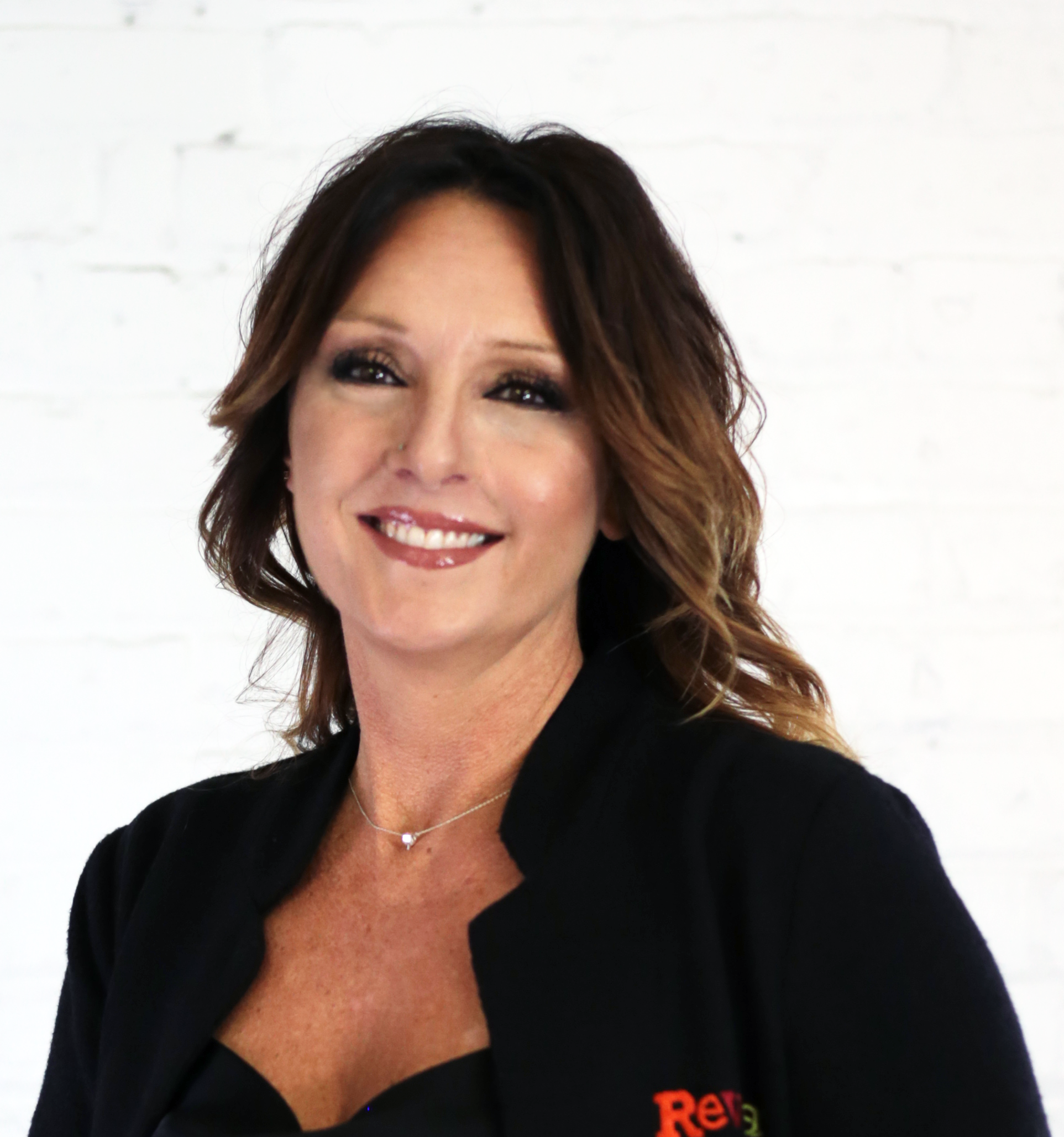
Michelle Hill
Michelle Hill is a master facilitator and coach at Revela, an organization specializing in the development of leaders and aligning the culture of privately held and family businesses of all sizes. Revela is one of the region's most experienced thought challengers, helping individuals and companies find their greatness.
-
An ambitious leader, Michelle has the natural ability to create forward momentum to build teams and get results. She inspires others to look within themselves and to challenge the status quo. She helps create high-performing environments. Michelle brings a diverse background: operations, employee development, and sales in the steel, hospitality, and consulting industries.
Outside of work, you will see her competitive side engaged in her daughter’s sports and ISU athletics. She loves life, her four-legged companions, and captures all the moments through her camera’s lens.
TRANSCRIPT
Andrea Fredrickson: On this episode of The Leadership Hustle, we're going to talk about why your people don’t tell you the truth. Hello, and welcome to The Leadership Hustle for executives whose companies are growing fast and need leaders who are ready. Hi there, and welcome back to this episode of The Leadership Hustle. I’m Andrea Fredrickson, and I’m joined by my co-host, Michelle Hill. Hello.
Michelle Hill: Hello.
Andrea Fredrickson: So today we’re continuing our series on culture. One of the things we believe strongly is that culture is the byproduct of what leaders do and what leaders don’t do. As we work with leaders at all stages of their journey, the goal is helping them create an intentional culture instead of allowing behaviors to drift and shape the culture by accident.
I was thinking about a situation that happens pretty frequently. I might ask a CEO or an executive a simple question: “Do your people challenge you?” And they’ll look at me and say something like, “Well, sometimes they can be difficult.” And I’ll say, “That’s not my question. My question is, do they question you? Do they push back? Do they tell you what’s really going on?”